1. Introduction – Three Paths into the Same Wallet
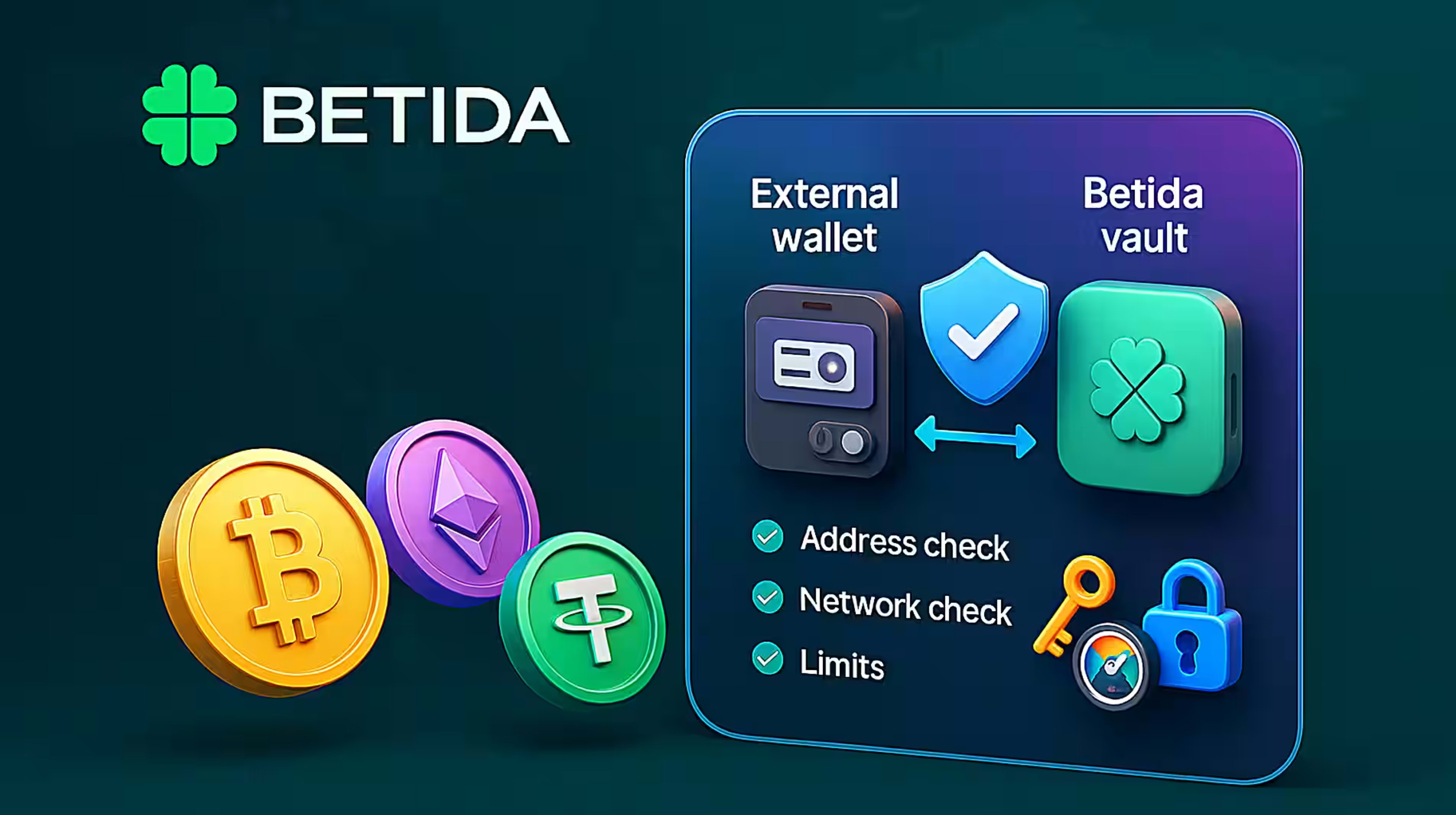
On Betida, all crypto deposits end up in the same place:
👉 your Betida crypto wallet / vault.
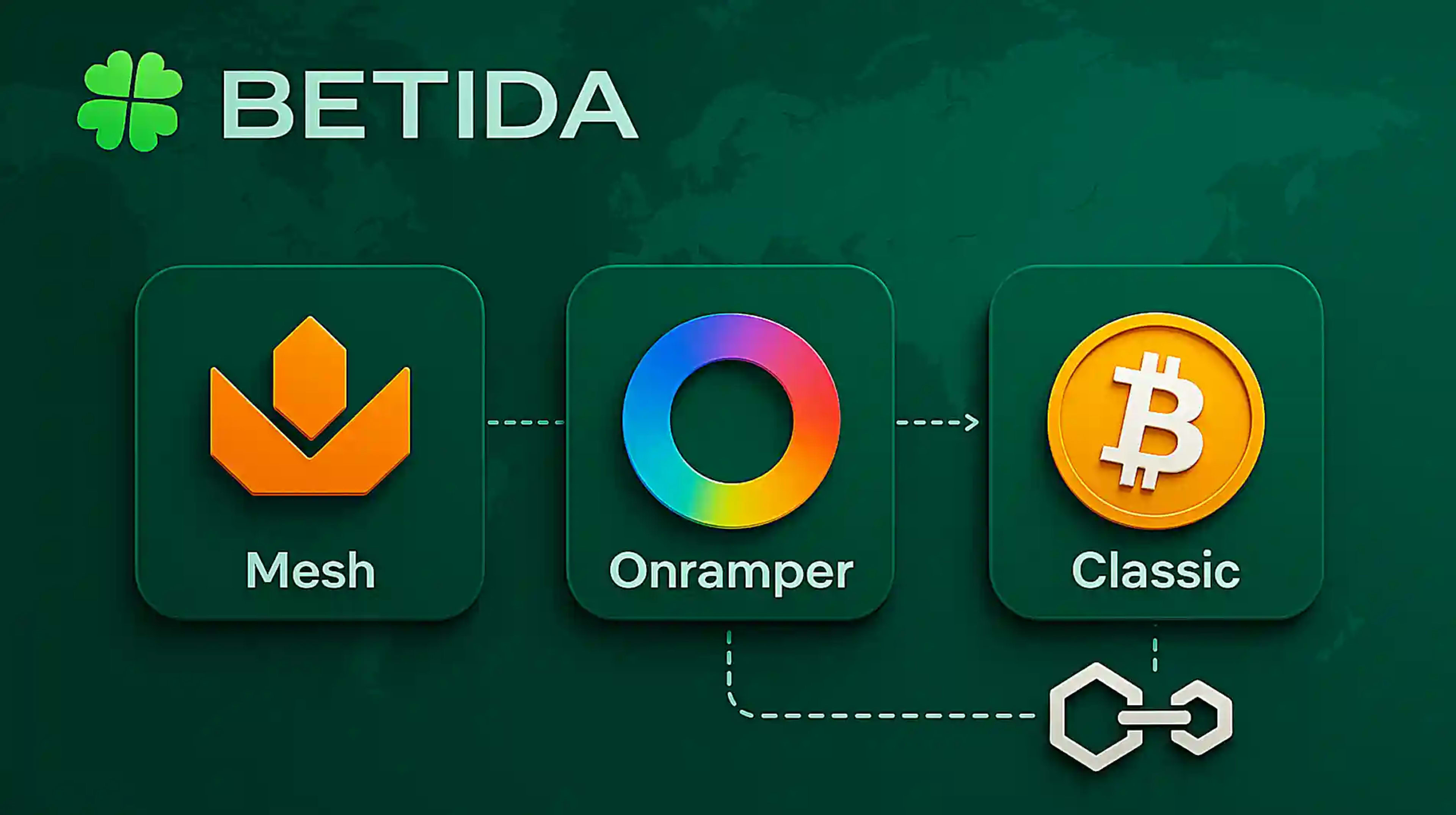
But there are three very different ways to get funds there:
- Classic blockchain transfer
- You send crypto from your own exchange or wallet to a Betida deposit address.
- Mesh
- You connect your exchange/wallet accounts and pull funds into Betida without copy-pasting addresses.
- Onramper
- You pay with card or local payment methods; Onramper buys crypto on your behalf and sends it straight to Betida.
Each method has its own trade-offs around:
- Speed
- Fees
- Technical complexity
- Risk of mistakes
- Which users it fits best
This guide puts all three side by side, and points to the detailed “how-to” articles for each flow.
Related guides:
- “How to Deposit Crypto to Betida – General Guide”
- “How to Deposit Crypto With Mesh?”
- “How to Buy Crypto with a Card on Betida – Onramper Guide”
- “Crypto Transaction Limits, Fees and Processing Times on Betida”
2. Quick Overview – When to Consider Each Method
Very short summary before we go deep:
- Classic blockchain transfers
- Best if you’re already comfortable with exchanges/wallets and address management.
- Most flexible; you stay fully in control of the sending side.
- Mesh
- Best if you already have crypto on supported exchanges/wallets and want a faster, less error-prone way to move it.
- Reduces “wrong address / wrong network” mistakes.
- Onramper
- Best if you don’t have crypto yet or don’t want to deal with exchanges at all.
- Card / local payment → crypto → Betida in one flow.
Now let’s break them down properly.
3. Classic Blockchain Transfers
3.1. How It Works
This is the traditional crypto flow:
- In Betida, open Deposit → Crypto.
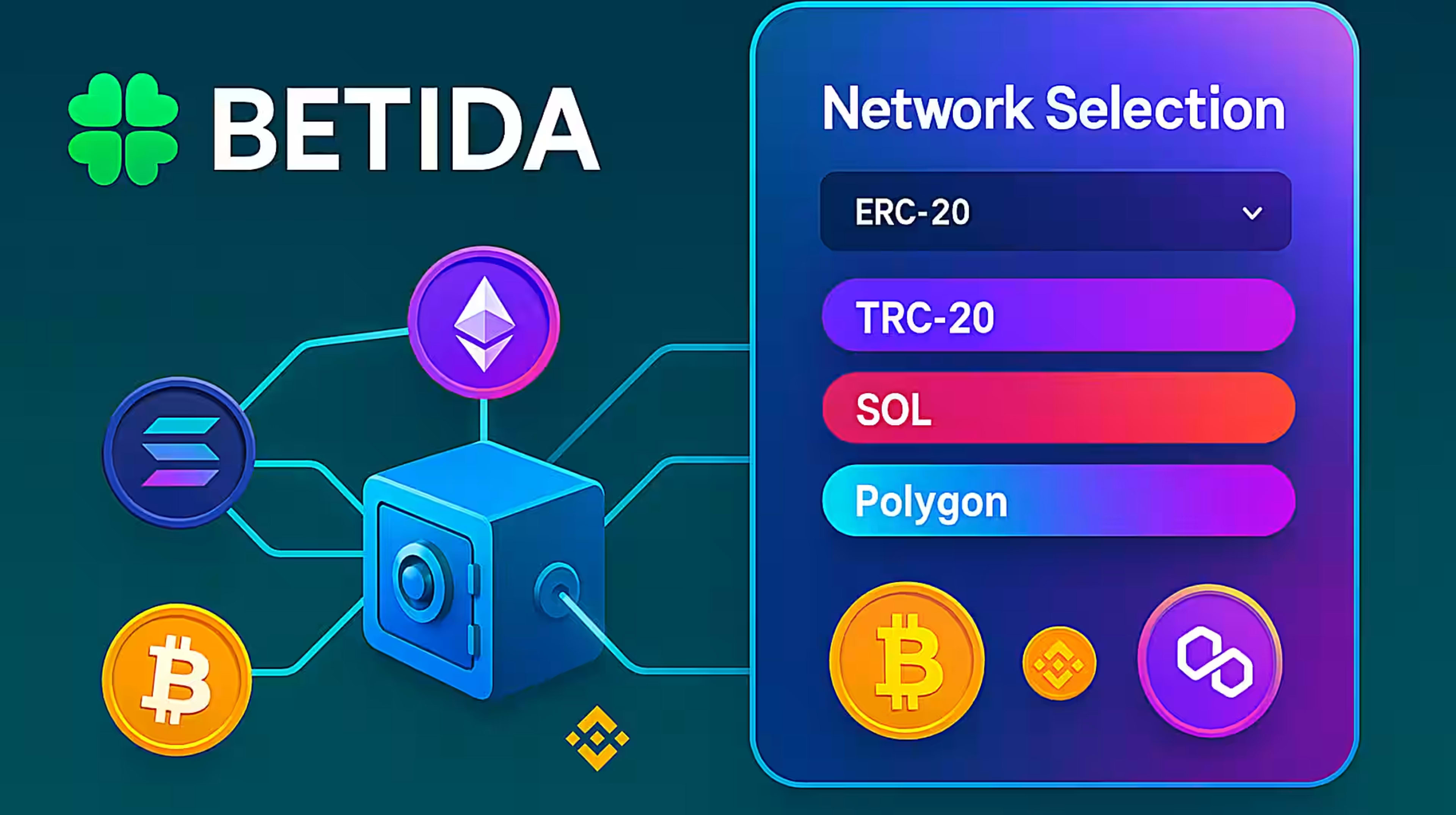
- Select the coin and network (e.g. USDT-TRC20, BTC, ETH-ERC20, SOL, POL).
- Betida shows you a deposit address for that coin/network.
- On your exchange or wallet, you:
- Choose the same coin,
- Choose the same network,
- Paste the address, enter the amount, confirm the withdrawal.
- After the required blockchain confirmations, your balance appears on Betida.
Full step-by-step: “How to Deposit Crypto to Betida – General Guide”
Background on networks: “Which Network Should I Use for Crypto Deposits on Betida? – ERC-20, TRC-20, SOL, POL Guide”
3.2. Advantages
- Full control
- You decide when, from which exchange/wallet, on which network, for which amount.
- Universal
- Works with virtually any exchange or self-custody wallet that supports withdrawals on the required network.
- Transparent fee structure
- You see the network fee directly in your wallet/exchange, and any Betida-side fee on the confirmation screen.
- Good for advanced users
- Especially if you already have a familiar workflow for moving crypto between platforms.
3.3. Limitations / Risks
- Higher risk of human error
- Copy-paste the wrong address → funds may be lost.
- Choose wrong network (e.g. USDT-BSC instead of USDT-TRC20) → potentially unrecoverable.
- More manual steps
- Switching between Betida and your exchange, verifying addresses, network, amount, memo (if any).
- Speed depends on multiple parties
- Your exchange’s withdrawal processing,
- Blockchain congestion,
- Betida’s required confirmation count.
3.4. Who Is It Best For?
- Users already comfortable with wallets, exchanges and network selection.
- Players who want maximum flexibility and are fine with a bit more manual work.
- Those who prefer to handle their own crypto security and routing end-to-end.
4. Mesh – Connected Crypto Transfers
4.1. How It Works
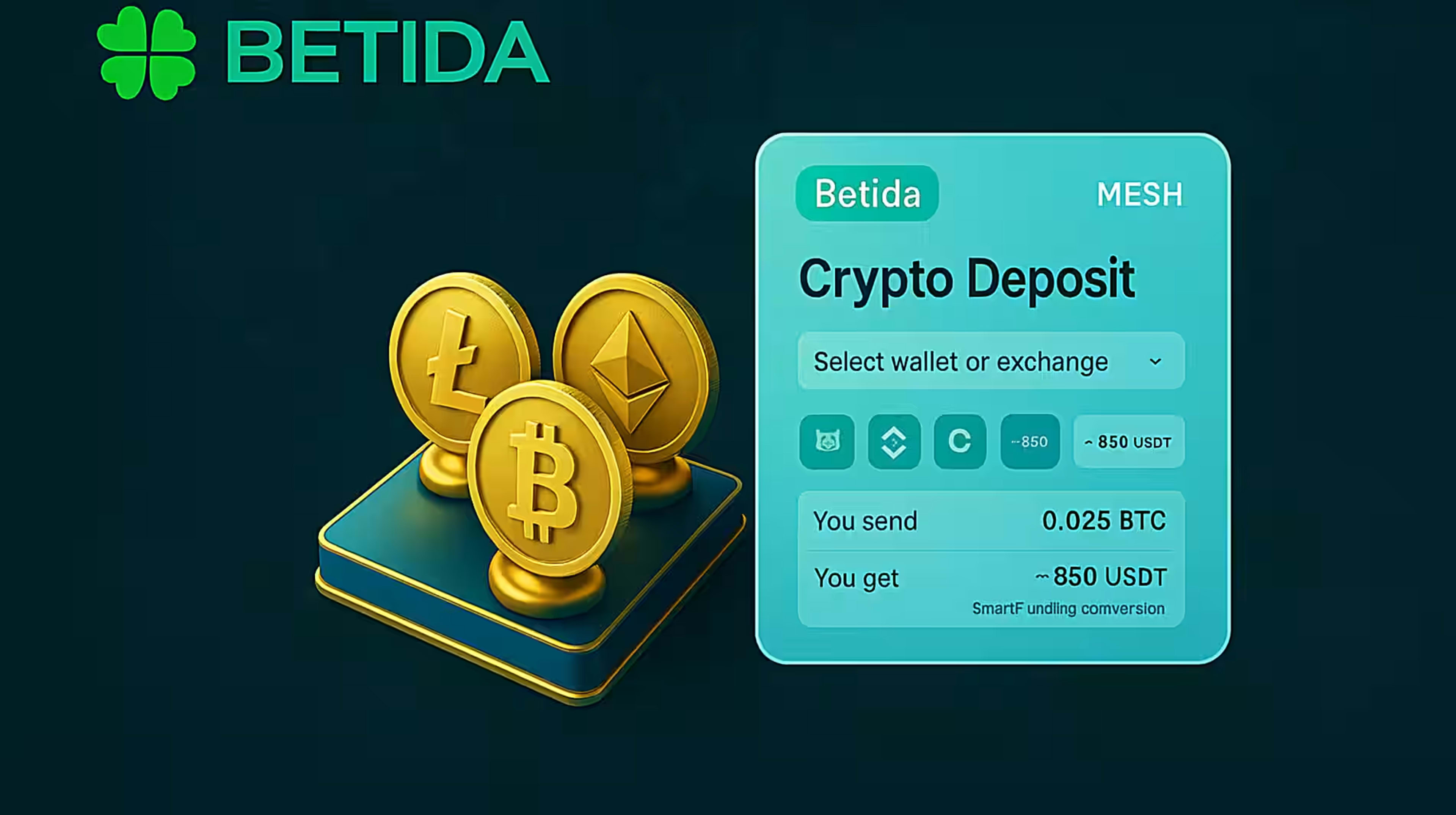
Mesh connects supported exchanges/wallet providers to Betida:
- On Betida, choose Deposit → Mesh.
- In the Mesh interface, connect your exchange/wallet accounts (e.g. via secure OAuth/connection methods).
- Select:
- The source account (exchange/wallet),
- The coin,
- The amount.
- Mesh initiates a transfer from your external account to the correct Betida address behind the scenes.
- Once the transfer is confirmed on-chain, your balance updates on Betida.
Details: “How to Deposit Crypto With Mesh?”
4.2. Advantages
- Much less manual input
- No need to copy/paste or manually manage deposit addresses.
- Reduced “wrong network/address” risk
- Mesh knows which asset and network is being moved, helping avoid classic user mistakes.
- Fast, integrated experience
- Everything happens inside Betida + Mesh; fewer context switches.
- Great for “exchange power users”
- If you already hold most of your crypto on supported exchanges, this can be your main flow into Betida.
4.3. Limitations / Considerations
- Provider coverage
- Only works with exchanges/wallets that Mesh supports. Not all providers may be available.
- Account connection
- You must be comfortable authorising Mesh to view and initiate transfers from your external accounts within the allowed scope.
- Same underlying blockchain reality
- Even though the UX is smoother, transfers still rely on the blockchain; network fees and confirmation times still apply.
4.4. Who Is It Best For?
- Players who have significant balances on supported exchanges/wallets.
- Those who want fewer steps and lower operational risk when funding Betida.
- Users who are comfortable connecting external accounts to a trusted integration.
5. Onramper – Card & Local Payment to Crypto
5.1. How It Works
Onramper is a fiat → crypto on-ramp embedded inside Betida:
- On Betida, choose Deposit → Onramper.
- In the embedded Onramper widget, you:
- Select the fiat amount (EUR, USD or supported local currency),
- Select which coin you want to receive on Betida (e.g. USDT, USDC, BTC, ETH, SOL, TRX).
- Choose a payment method:
- Credit/debit card,
- Or a supported local payment option (varies by region).
- Complete the payment (3D Secure, additional checks if needed).
- Onramper buys the crypto for you and sends it directly to Betida’s deposit address.
- Once the transaction is confirmed, your Betida balance updates.
Details: “Betida’da Kart ile Kripto Nasıl Satın Alınır? – Onramper Rehberi” / “How to Buy Crypto with a Card on Betida – Onramper Guide”
5.2. Advantages
- No exchange or external wallet needed
- Perfect if you’re new to crypto or don’t want to manage separate trading accounts.
- All-in-one flow
- Fiat payment, crypto purchase and Betida deposit are handled in a single interface.
- Region-optimised payment options
- In many countries, you can use local methods that feel more familiar than global exchanges.
- Ideal for “occasional” players
- If you only buy crypto to play on Betida (and not for trading/investing), this is often the simplest route.
5.3. Limitations / Considerations
- Additional fees
- Total cost may include:
- Payment provider/card processing fees,
- Onramper service fees,
- Network (gas) fees.
- All of these are shown on the summary screen before you confirm.
- KYC / compliance checks
- As a regulated on-ramp, Onramper may require identity verification and additional checks depending on amount, region and risk signals.
- Card and bank side risks
- Your bank may decline transactions, apply extra security checks or treat them differently to normal e-commerce purchases.
5.4. Who Is It Best For?
- Users who don’t yet own crypto and just want a simple way to fund their Betida account.
- Players who do not want to open or manage exchange accounts.
- Those who are comfortable using card/local payment methods for entertainment budgets.
6. Speed, Fees, Convenience – Head-to-Head
6.1. Speed (Typical Experience)
- Fastest feel:
- Mesh and Onramper often feel faster because most steps stay in one interface and transfers start immediately after approval.
- Classic transfers:
- Can be just as fast if your exchange processes withdrawals quickly and the network is clear,
- But sometimes involve extra withdrawal queues or internal checks.
Remember: blockchain confirmation times apply in all cases; only the front-end flow changes.
6.2. Fees
All three methods are affected by:
- Network fees (gas) – set by the blockchain, not Betida.
Pay attention to:
- Classic transfers
- You usually see network fees on your exchange/wallet side; they may offer different fee levels (slow/normal/fast).
- Mesh
- Uses your exchange’s fee logic under the hood; any Mesh service fees would be shown in the flow if applicable.
- Onramper
- Combines payment fees + service fees + network fees.
- Easy, but often not the cheapest route for large, frequent deposits.
Detailed breakdown: “Crypto Transaction Limits, Fees and Processing Times on Betida”
6.3. Convenience & Safety
- Lowest operational risk: Mesh & Onramper
- No manual address entry = much lower chance of sending to the wrong place.
- Highest control & flexibility: Classic transfers
- You choose everything, can switch exchanges/wallets any time, and you keep custody of your sending accounts entirely separate.
- Best for “one-off” players: Onramper
- You can treat it like any online purchase and forget about long-term crypto management.
7. Choosing the Right Method – Based on Your Profile
7.1. If You’re New to Crypto
- Primary choice: Onramper
- Use your card/local payment to buy a small, fixed amount of crypto to try Betida.
- Later:
- If you decide to explore crypto more broadly, you can open an exchange account and move into Mesh / classic flows.
Don’t forget to apply Betida Smart principles and treat this as entertainment spending, not investment.
Related:
- “What Is a Crypto Exchange and How Does It Work?”
- “Responsible Gambling with Crypto on Betida – Betida Smart Guide”
7.2. If You Already Trade on Exchanges
- Primary choice: Mesh (if your providers are supported)
- Fast, integrated, fewer chances for mistakes.
- Alternative:
- Classic transfers when Mesh doesn’t support a specific provider or coin yet.
Here, you likely care more about:
- Fees – picking lower-fee networks like TRC-20, SOL, POL when supported.
- Flexibility – routing funds between exchanges, wallets and Betida efficiently.
7.3. If You’re a Long-Term Crypto Holder (Self-Custody)
- Primary choice: Classic blockchain transfers from your hardware wallet or self-custody wallet.
- Comment: Mesh and Onramper are more exchange- / fiat-oriented; if your strategy is “cold storage + occasional play”, classic transfers make more sense.
Here, double-check:
- The network supported by Betida for that coin,
- Any minimum deposit amounts,
- Your overall entertainment budget (don’t dip into long-term holdings beyond what you can lose).
7.4. If You Care Mostly About Budget Discipline
No matter which method you pick:
- Set personal monthly/weekly deposit limits in fiat terms (e.g. “max 200 USD per month”).
- Use Betida’s internal tools (where available) to enforce deposit/loss/time limits.
Then:
- Use Onramper only within that limit if you fund via card,
- Use Mesh / classic transfers for controlled, pre-planned top-ups from your crypto stack.
Related: “Crypto Volatility and Bankroll Management – Betida Smart Guide” and “Responsible Gambling with Crypto on Betida – Betida Smart Guide”
8. Mixed Strategy – You Don’t Have to Pick Just One
In practice, many Betida players use more than one method:
- Use Onramper once to get started with crypto and try Betida.
- Open an exchange account later, then move to Mesh for smoother, cheaper funding.
- For long-term holdings in cold storage, drop in occasional classic transfers directly from your own wallet.
What matters is not choosing a “winner” between Mesh, Onramper and classic transfers, but:
- Matching the method to your current situation,
- Understanding the fees, risks and timeframes of each,
- Keeping everything aligned with your responsible gambling and bankroll plan.
9. Summary
Mesh, Onramper and classic blockchain transfers all lead to the same destination – your Betida crypto wallet – but they suit different types of players:
- Classic blockchain transfers
- Maximum control and flexibility, best for experienced crypto users.
- Mesh
- Integrated, convenient and safer for those who already hold crypto on supported exchanges/wallets.
- Onramper
- Simplest path for players who want to fund Betida with card or local payments without touching exchanges.
Whichever method you choose:
- Always double-check coin + network,
- Read the fee and limit information before confirming,
- Use Betida Smart principles to stay within a sensible budget.
Done right, funding your Betida account becomes just a clean, predictable step – and you can focus on the part you actually care about: your games, your bets and your long-term enjoyment.



 BETIDA