This article explains the difference between your external crypto wallets and your Betida in-account vault, the security measures you should take on both sides, and Betida’s core principles for safeguarding crypto.
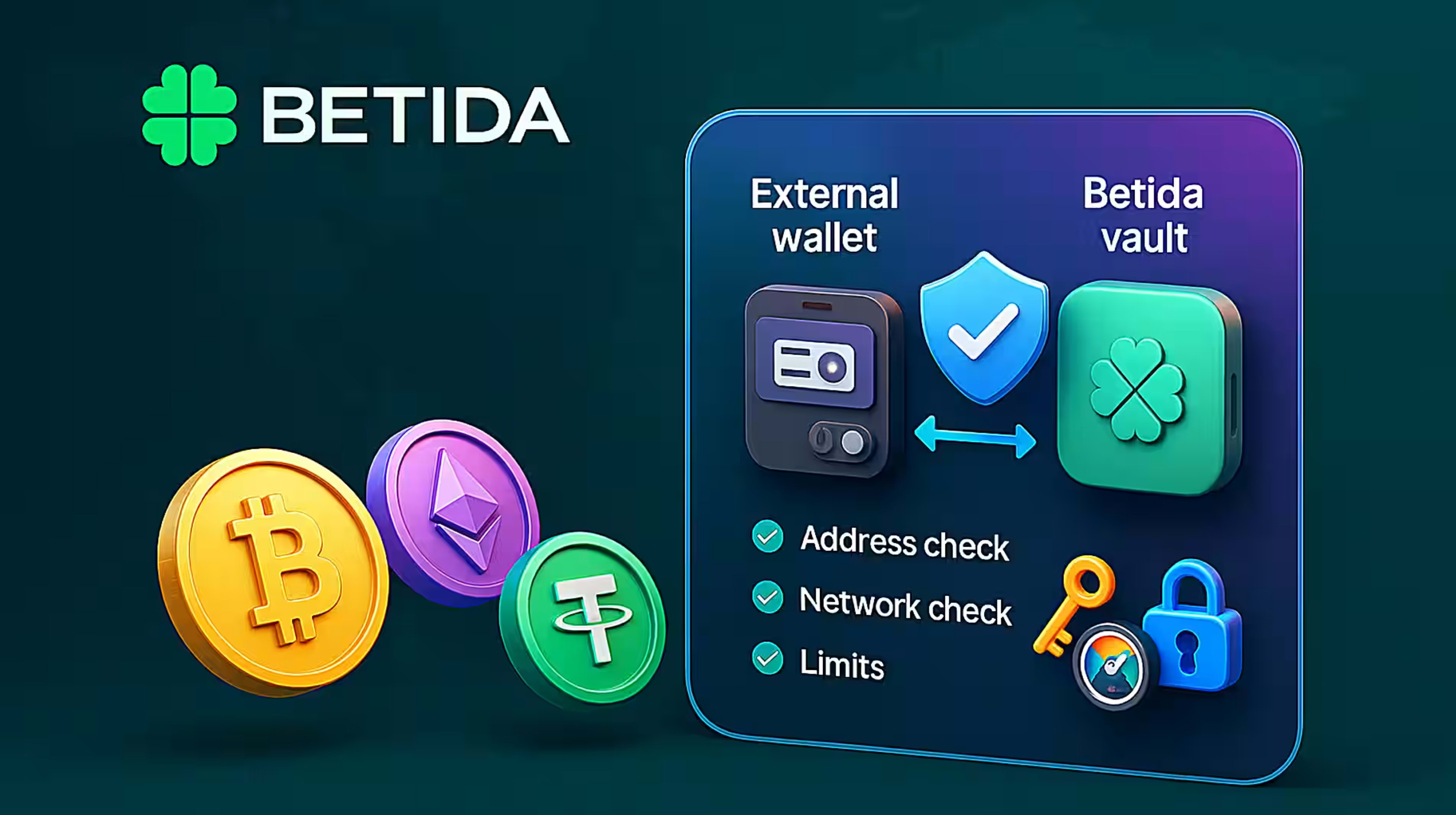
1. External Wallets vs Betida Vault – What’s the Difference?
Your external wallets:
- Exchange account wallets (Binance, Coinbase, etc.)
- Software wallets (MetaMask, Trust Wallet, Phantom, etc.)
- Hardware wallets (Ledger, Trezor, etc.)
These:
- Are under your personal control,
- Are linked to a private key or seed phrase that only you should know,
- Interact with Betida only when you deposit or withdraw crypto.
Your Betida vault / in-account wallet:
- Represents the crypto balance you hold inside your Betida account,
- Is the balance you use for casino and sports betting,
- Is presented as a typical “account balance”, backed by crypto infrastructure on the backend.
2. Core Principles of Wallet & Vault Security on Betida’s Side
While full technical details are not exposed to users, a professional crypto security approach generally includes:
- Segregation of funds
- The platform’s own operational funds are kept separate from customer balances.
- Hot / cold wallet balance
- A limited amount of crypto is kept in hot wallets for daily operations,
- Larger portions are stored in more secure cold or semi-cold environments.
- Access control
- Strict role-based access and multi-approval workflows for moving funds.
- Monitoring and alerts
- Internal monitoring and alert systems for unusual or suspicious activity.
- Regular checks
- Internal reconciliations, security reviews and control audits.
3. What You Must Do as a User
Even with a secure platform, some responsibilities lie entirely with you:
- Account security
- Use a strong, unique password.
- Enable 2FA if available.
- Do not share your login credentials with anyone.
- Device and network hygiene
- Avoid making large deposits/withdrawals on shared computers or public Wi-Fi.
- Keep your OS and browser up to date and use trusted security software.
- External wallet safety
- Never share your seed phrase / recovery words; do not store them in screenshots or cloud notes.
- For larger holdings, prefer hardware wallets and only move the amount you want to play with into Betida.
4. Security Checks Around Crypto Transactions on Betida
Without over-complicating the user experience, platforms like Betida may implement mechanisms such as:
- Additional verification for large withdrawals (email confirmation, 2FA, etc.),
- Session or IP checks and re-authentication in suspicious situations,
- Automatic internal reviews for long-inactive accounts or unusual behaviour.
The goal is to combine fast processing with strong protection of user funds.
5. Building Your Own Strategy
Practical suggestions:
- Keep a small “hot” balance for daily play
- Hold only your intended gambling bankroll inside Betida,
- Keep your main savings and long-term holdings in external wallets or hardware storage.
- Withdraw regularly when ahead
- If you experience sustained profit periods, consider withdrawing part of your balance back to your external wallets.
- Review activity frequently
- Check your account history and email notifications regularly;
- If you see any unfamiliar activity, change your password immediately and contact support.
6. Conclusion
Wallet and vault security is a shared responsibility between:
- Betida, which aims to apply institutional-grade security practices to its infrastructure and vaults, and
- You, the user, who must apply strong personal security hygiene on accounts, devices and external wallets.
When both sides do their part — platform-level protections and user-level precautions — betting with crypto on Betida becomes significantly more secure, predictable and professional.